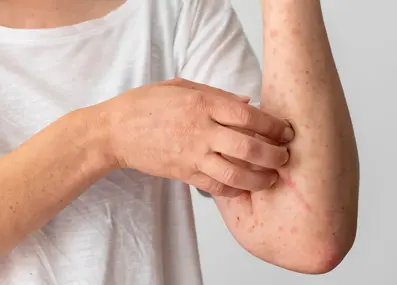
Skin Diseases
Skin diseases, also known as dermatological disorders or dermatoses, encompass a wide range of conditions that affect the skin, hair, nails, and mucous membranes. These diseases can have various causes, including genetic factors, infections, autoimmune disorders, allergies, environmental factors, and systemic diseases.
Psoriasis
Psoriasis is addressed as Kithibha in Ayurveda, often triggered by unresolved trauma or toxins in the blood. Other factors that may contribute to psoriasis include chronic stress and poor diet. According to Ayurveda, psoriasis may manifest because of vitiated Pitta and Vata dosha. While Vata dosha causes pain and scaling, pitta dosha is responsible for the burning sensation, inflammation, and itching. Since the symptoms and triggers of psoriasis are unique to each patient, Ayurveda recommends targeted therapies to treat the root cause of the problem. Some of the standard therapies in Ayurveda for psoriasis include Shodhana Chikitsa, Shamana Chikitsa and Rasayana Chikitsa, to name a few.
Eczema
The symptoms of eczema can be treated with herbs like cardamom, turmeric, neem, and Indian sarsaparilla. Using Triphala for eczema is also an effective Ayurvedic cure for eczema. You can also take certain Ayurvedic herbs that help the neurological system because stress might also cause eczema flare-ups. These herbs include Brahmi, winter cherry, and kava kava.
Allergies
Ayurveda believes that an imbalance of the three Doshas can cause allergies. When your Doshas are not at their optimal levels, allergic reactions aggravate, making your body unable to expel the accumulated toxins due to a weakened immune system. When this condition continues for a prolonged period, the allergy becomes a chronic condition.
Pimples and Acne
The ancient science of Ayurveda has answers to every skin problem, including acne. Depending on the underlying trigger, acne can take several shapes and forms.
Urticaria
Urticaria or hives is an allergic skin reaction that may occur at any age, at any part of body. It may be acute or chronic and is caused by swelling of upper dermis. Sometimes, urticaria can develop without an allergy (autoimmune reaction).Udarada is a skin disease characterised by skin eruptions, itching and redness which often manifest during sisira rtu (cold season). Kota is another skin condition with eruptions all over the body, itching and redness and is a common symptom of infections, insect bites, sannipata jwara (fever caused by vitiation of tridosha), and rakta dosha (disorders of blood). Avoid over-exposure to sunlight, heat, potential allergens etc. Maintain personal hygiene. Avoid tight clothing and heavy sweating. Practice periodical virechana (ayurvedic purgation therapy) and nasya (nasal application of suitable oil) as per the guidance of physician. Avoid excess intake of spicy, sour, hot food items.